Showing posts with label American Politics. Show all posts

Sunday, September 30, 2007

How can he say this stuff with a straight face?

I apologize for not picking up on this sooner. Iranian President Mahmoud Ahmadinejad's visit to Columbia University on Monday eclipsed most American coverage of President Bush's speech at the United Nations General Assembly the following day:

This great institution must work for great purposes -- to free people from tyranny and violence, hunger and disease, illiteracy and ignorance, and poverty and despair. Every member of the United Nations must join in this mission of liberation.

First, the mission of the United Nations requires liberating people from tyranny and violence. The first article of the Universal Declaration begins, "All human beings are born free and equal in dignity and rights." The truth is denied by terrorists and extremists who kill the innocent with the aim of imposing their hateful vision on humanity. The followers of this violent ideology are a threat to civilized people everywhere. All civilized nations must work together to stop them -- by sharing intelligence about their networks, and choking their -- off their finances, and bringing to justice their operatives.

In the long run, the best way to defeat extremists is to defeat their dark ideology with a more hopeful vision -- the vision of liberty that founded this body. The United States salutes the nations that have recently taken strides toward liberty -- including Ukraine and Georgia and Kyrgyzstan and Mauritania and Liberia, Sierra Leone and Morocco. The Palestinian Territories have moderate leaders, mainstream leaders that are working to build free institutions that fight terror, and enforce the law, and respond to the needs of their people. The international community must support these leaders, so that we can advance the vision of two democratic states, Israel and Palestine, living side-by-side in peace and security.

Its too bad the Palestinian people tried to vote those Palestinian leaders out of office a few years ago. Its also too bad that U.S. is doing nothing to prevent Israel from declaring the Gaza Strip an 'enemy entity' and closing it off to everything but humanitarian aid. But I digress. The speech only gets better:

Brave citizens in Lebanon and Afghanistan and Iraq have made the choice for democracy -- yet the extremists have responded by targeting them for murder. This is not a show of strength -- it is evidence of fear. And the extremists are doing everything in their power to bring down these young democracies. The people of Lebanon and Afghanistan and Iraq have asked for our help. And every civilized nation has a responsibility to stand with them.

Every civilized nation also has a responsibility to stand up for the people suffering under dictatorship. In Belarus, North Korea, Syria, and Iran, brutal regimes deny their people the fundamental rights enshrined in the Universal Declaration. Americans are outraged by the situation in Burma, where a military junta has imposed a 19-year reign of fear. Basic freedoms of speech, assembly, and worship are severely restricted. Ethnic minorities are persecuted. Forced child labor, human trafficking, and rape are common. The regime is holding more than 1,000 political prisoners -- including Aung San Suu Kyi, whose party was elected overwhelmingly by the Burmese people in 1990.

The ruling junta remains unyielding, yet the people's desire for freedom is unmistakable. This morning, I'm announcing a series of steps to help bring peaceful change to Burma. The United States will tighten economic sanctions on the leaders of the regime and their financial backers. We will impose an expanded visa ban on those responsible for the most egregious violations of human rights, as well as their family members. We'll continue to support the efforts of humanitarian groups working to alleviate suffering in Burma. And I urge the United Nations and all nations to use their diplomatic and economic leverage to help the Burmese people reclaim their freedom.

In Cuba, the long rule of a cruel dictator is nearing its end. The Cuban people are ready for their freedom. And as that nation enters a period of transition, the United Nations must insist on free speech, free assembly, and ultimately, free and competitive elections.

In Zimbabwe, ordinary citizens suffer under a tyrannical regime. The government has cracked down on peaceful calls for reform, and forced millions to flee their homeland. The behavior of the Mugabe regime is an assault on its people -- and an affront to the principles of the Universal Declaration. The United Nations must insist on change in Harare -- and must insist for the freedom of the people of Zimbabwe.

In Sudan, innocent civilians are suffering repression -- and in the Darfur region, many are losing their lives to genocide. America has responded with tough sanctions against those responsible for the violence. We've provided more than $2 billion in humanitarian and peacekeeping aid. I look forward to attending a Security Council meeting that will focus on Darfur, chaired by the French President. I appreciate France's leadership in helping to stabilize Sudan's neighbors. And the United Nations must answer this challenge to conscience, and live up to its promise to promptly deploy peacekeeping forces to Darfur.

Maybe these words would mean more if they were spoken before we opened an extra-judicial prison camp in Guantanamo Bay. Or before we established secret prisons. Or before the abuses at Abu Ghraib happened. Or before we started torturing people. Or before we enlisted other states to torture on our behalf.

Setting aside the matter of whether all of the above had to happen in order to 'save lives,' does President Bush realize that making speeches like this only hurt America's image abroad? I'll be the first cop to hypocrisy in U.S. foreign policy. It is a dirty business full of questions with no right answers.

But must President Bush use such self-righteous and indignant language in front of the whole world when he knows that is the U.S. is adding more 'War on Terror' skeletons to its closet every day? Why didn't he just talk about poverty or women's rights or some other issue that the U.S. is not actively disrupting. Heck, talk about global warming for all I care.

Just stop embarrassing the country with this hollow talk of freedom. It doesn't fool anyone.

Hear that? Its the sound of norm disintegration...

Back in April, I remember hearing rumors around the water cooler that the Israelis were lobbying the Nuclear Suppliers Group for a 'Bush-Singh' type of nuclear trade agreement. At the time, I wasn't able to uncover any news items to confirm such talk, so I dismissed it as Pentagon gossip.

Well, it appears that the rumors were true. According to a piece in today's Post, Israel did lobby the NSG back in March and they are now taking a proposal to Capitol Hill:

The Israeli presentation, made in a "nonpaper" that allows for official deniability, was offered in the context of the NSG's debate over India's bid for an exemption, according to a March 17 letter by the NSG's chairman. Among the nations that have not signed the treaty, only India and Israel would qualify for admission to the NSG under the Israeli proposal.

David Siegel, spokesman for the Israeli Embassy, said it would be "grossly inaccurate" to suggest that Israel is demanding an exemption or linking its efforts to any other issue, such as the India debate.

"Israel has never asked the NSG for any exemption to its nuclear supply guidelines, nor has Israel made any Israeli-specific request of the NSG," Siegel said. "Israel, recognized to be a full-fledged adherent to the NSG guidelines, has urged the NSG to consider adopting a generic, multi-tiered, criteria-based approach towards nuclear technology transfers." He noted that some NSG countries previously have suggested such an approach.

"Modification of the NSG guidelines, were it to take place along the lines proposed by Israel, would considerably enhance the nuclear nonproliferation regime," Siegel said.

The Israeli plan offers 12 criteria for allowing nuclear trade with non-treaty states, including one that hints at Israel's status as an undeclared nuclear weapons state: A state should be allowed to engage in nuclear trade if it applies "stringent physical protection, control and accountancy measures to all nuclear weapons, nuclear facilities, source material and special nuclear material in its territory."

If you look at the tenor of Bush administration nonproliferation policy, they should be inclined to agree with such a proposal. Prior to 2000, nonproliferation was about keeping the declared and undeclared portions of the nuclear weapons club as small as possible. Now, nonproliferation is about keeping nuclear weapons out of the hands of 'tyrants' and 'terrorists.'

While I would be the last one to advocate for giving a 'tyrant' or a 'terrorist' a nuclear weapon, I would like to point out two flaws in the White House's logic: (1) What exactly are the criteria for applying either label to a nation or group? (2) How do plan on convincing all states with relatively mature nuclear industries to sign up to those definitions?

Right now, the answer to the first question looks a lot like 'those nations or groups who oppose U.S. foreign policy.' If the administration has an answer for the second question, I sincerely hope it does not have the word 'followership' in it. It wouldn't surprise me if it had the word 'U.S. sanctions' in it though.

Fortunately, I think the Bush administration will keep its distance from the Israeli proposal for fear of doing harm to their India deal. This is probably also why we are hearing about Israeli activity on Capitol Hill. If the White House was really receptive to the proposal, the first time we would have heard about it is when a final agreement was ready for signature.

Monday, August 20, 2007

Arkin hearts Richardson

Sorry about the lack of posts this weekend, but I just turned 25, so I decided to focus on birthday cake instead of blogging. Got a pretty sweet Canon SD1000 to replace my old S330. Letting the well-travelled, old clunker go is a little sad, but I think the new camera's seven megapixels of photographic goodness will help me get over it.

Onto to the news: After a long period of opinion estrangement, Bill Arkin and I appear to be back on the same page:

Now read how Bill Richardson handled the question of new nuclear warheads: "We do not need a new generation of nuclear weapons," he says, speaking as a former Energy secretary. "Under my administration, we will lead the world toward the reduction of nuclear arsenals, not their augmentation," he writes.

And then he tied it together with other objectives to make it real: "The Non-Proliferation Treaty commits non-nuclear states to forego nuclear weapons, and it also commits the nuclear weapons states to the goal of nuclear disarmament. Too often, this aspect of the Treaty is forgotten. In order to get others to take the NPT seriously, we need to take it seriously ourselves. We should re-affirm our commitment to the long-term goal of global nuclear disarmament, and we should invite the Russians to join us in a moratorium on all new nuclear weapons. And we should negotiate further staged reductions in our arsenals, beyond what has already been agreed, over the next decade."

Richardson also excels at answers on Russia, Iran and North Korea, on Pakistan, and on actual moves he might take to reduce the chance the nuclear weapons or nuclear materials would make their way into the hands of terrorists. "Negotiations to reduce our arsenal also represent our diplomatic ace-in-the-hole," Richardson writes. "We can leverage our own proposed reductions to get the other nuclear powers to do the same -- and simultaneously get the non-nuclear powers to forego both weapons and nuclear fuel enrichment, and to agree to rigorous global safeguards and verification procedures."

Although I don't agree with Richardson's aggressive stance on ending the Iraq War, it is only one negative in a broad range of positives -- most important of which is his libertarian-leaning domestic platform. As he said during Sunday's ABC News-hosted Democratic debate, he has both an interesting policy platform and experience as an administrator.

I don't like to wade too deeply into politics, but seeing as how Richardson's chances at snagging the Democratic nod are pretty long, I am endorsing his candidacy for the vice presidential slot on the Democratic ticket in '08. So vote [insert name here]/Richardson in '08!

Friday, August 17, 2007

What an idiot

The following paragraph was plucked directly from Rudy Giuliani's essay in the September/October issue of Foreign Affairs:

Another step in rebuilding a strong diplomacy will be to make changes in the State Department and the Foreign Service. The time has come to refine the diplomats' mission down to their core purpose: presenting U.S. policy to the rest of the world. Reforming the State Department is a matter not of changing its organizational chart -- although simplification is needed -- but of changing the way we practice diplomacy and the way we measure results. Our ambassadors must clearly understand and clearly advocate for U.S. policies and be judged on the results. Too many people denounce our country or our policies simply because they are confident that they will not hear any serious refutation from our representatives. The American ideals of freedom and democracy deserve stronger advocacy. And the era of cost-free anti-Americanism must end.

That statement makes the inconsistencies in Mitt Romney's piece from the last issue look relatively minor.

Does Giuliani know what the Foreign Service does on a day-to-day basis? Most spend their time issuing visas, helping U.S. citizens abroad, conducting intergovernmental business and most importantly, maintaining an understanding of the countries they are working in. We are in the second decade of the Information Age and the Hypertext Markup Language is more than 15 years old. The president can present U.S. policy to the world in a thirty minute press conference. He doesn't need drones to mindlessly repeat U.S. policy ad nauseam.

This brings us to the fact that Rudy Giuliani's approach to foreign policy demonstrates the savvy and depth of in a high school boy who goes to debate club meetings to cruising for girls with low self-esteem issues. Members of the international community don't disagree with us simply because we haven't explained our position well enough. They disagree because they don't like some (or all) aspects of U.S. policy.

Despite what a neoconservative will tell you, there is no such thing as objective moral high-ground in international relations. The U.S. can't just state its foreign policy to the international community and assume that anyone (short of the British and Australians) will blindly follow suit. Leadership is not just stating policy, but instead, its haggling and cajoling allies, friendly and even hostile countries needed to get everyone on board with a policy.

Giuliani's approach feels like it will be all talk, but no action. I mean, how exactly does he propose raising of the cost of anti-Americanism abroad? Imposing sanctions? Ending diplomatic relations? Punitive military action? Get real...

One last thing: Does anyone else remember the News Hour interview with Condi Rice from late 2002 where she almost says 'leadership breeds followership'? It was such a classic demonstration of the Ameri-centric worldview that is becoming popular among baby-boom generation politicians and foreign policy elites.

Thursday, August 16, 2007

Congress hearts Iran sanctions too

Galrahn, the Armchair Admiral, recommended that I also do an analysis of the Iran sanctions bills currently moving through the House and Senate.

One of these three bills is the "Iran Sanctions Enabling Act of 2007" that was originally sponsored by Representative Barney Frank (D-MA) and introduced in the House in May.

HR.2347 "Iran Sanctions Enabling Act of 2007"

The bill orders the Department of Treasury to maintain a list of foreign or U.S. persons who have invested more than $20 million in the Iranian oil industry. It then gives investors who divest themselves from a person on the Treasury list a safe harbor from civil, criminal and administrative actions and suits against the divestiture.

It also makes it the policy of the United States to support decisions by state and local governments and educational institutions to divest themselves from persons who are on the Treasury list.

The bill was passed by a hefty margin (408-6) in the House in early July and was introduced in the Senate in early August. I know socially responsible investing is really popular with folks on the left, but I bet the tangible impact of this Representative Frank's bill will be marginal.

The other two bills share the title "Iran Counterproliferation Act of 2007" and share most of the same content. The House version was introduced in March 2007 by Representative Tom Lantos (D-CA).

HR.1400 "Iran Counter-Proliferation Act of 2007"

The Lantos bill closes off the exemptions for the importation of Iranian rugs, foodstuffs and informational materials and the exportation of civil aviation safe equipment. Not surprisingly, exemptions for medicine and food exports are left alone, no doubt the handiwork of the pharmaceutical and farm lobbies.

It also mandates the President impose six types of sanctions on persons found to be violating the Iran Sanctions Act of 1996. Currently, the President is only require to impose two sanctions from a list that includes exclusion from the U.S. financial system, being listed as a denied party under all of the major export control regulations and disbarment from doing business with the U.S. government. It also removes the President's ability to waive these sanctions under any circumstances.

The bill also makes the foreign subsidiaries of any U.S. company subject to the Iran Sanctions Act by making the parent company liable for the subsidiary's sanctions busting. The definition of a foreign subsidiary is also defined down from super majority ownership to simple majority ownership.

Ironically, Lantos's bill would require that the executive list the Iranian Revolutionary Guard Corp as a 'specially designated global terrorist,' a 'foreign terrorist organization' and a 'weapons of mass destruction proliferator.'

S.970 "Iran Counter-Proliferation Act of 2007"

The Senate version of this bill was introduced shortly after the Lantos bill in March 2007 by Senator Gordon Smith (D-OR).

The only major difference between the House and Senate bills is that the Senate takes the additional step of negotiation and implementation of a U.S.-Russian 123 agreement until the President can certify that Russia has stopped assisting the Iranian nuclear program.

Given the broad scope of unilater U.S. sanctions already imposed on Iran and persons who deal with Iran, I imagine the impact of any of these measures will be marginal as best. At worst, they will have no impact on Iran while driving a larger wedge between Russia, Europe and the U.S.

Wednesday, August 15, 2007

What's better than sanctions? More sanctions!

I had to produce an primer for my boss and coworkers today about the Bush administration's decision to declare the Iranian Revolutionary Guard Corp a 'specially designated global terrorist' and I figured I would share it with my readers:

What happened?

The United States Government designated the Iranian Revolutionary Guard Corps, a subset of the Iranian military, to be a 'specially designated global terrorist group' pursuant to the rules of Executive Order 13224 signed by President George W. Bush on September 23, 2001.

What is Executive Order 13224 and what is an SDGT?

E.O. 13224 allows the U.S. Government to block the property of any person (including corporate persons) in the U.S. that is listed in the order's annex. It also allows the government to block transactions between U.S. persons and anyone listed in the annex.

The Secretary of the Treasury, Secretary of State or Attorney General also have the power to declare a U.S. person or person within the U.S. as being subject to the limitations imposed by the order. The grounds for such a declaration are if that person has 'committed or poses a significant risk of committing acts of terrorism that threaten the security of U.S. nationals or the national security, foreign policy, or economy of the U.S.' or if that person has 'assisted, sponsored, or provided financial, material or technological support or other services' to support acts of terrorism or to persons listed in the annex.

SDGT is just a fancy way of referring to the individuals and groups on in the E.O.'s annex. The simplified list of SDGTs is 11 pages long, while the detailed list is a little over 100 pages long.

What has changed?

In practice, the 'State Sponsor of Terrorism' designator hasn't translated into the same set of restrictions for each country on the state-sponsors list. For Iran, being on the 'bad boys' list means that no U.S. person or person within the U.S. can trade with or conduct transactions in Iran or with the Iranian Government. There is a narrow exception to this rule for importing Iranian trinkets, information, foodstuffs and, most importantly, Persian rugs, through foreign intermediaries.

Being designated an SDGT closes the Iranian Transaction Regulations' import exemptions on trinkets, food and carpets. It also allows the U.S. government to go beyond merely blocking transactions to actually freezing IRCG assets in the U.S. or held by U.S. persons.

It is not clear whether this change will actually have a tangible impact on the IRCG. The U.S. government seized most Iranian government assets shortly after the 1979 revolution. It has imposed an unilateral embargo on Iran continuously since E.O. 12613 was put in place by the Reagan administration.

There have been so few opportunities to legally acquire any Iranian property that I imagine the number of U.S. persons or persons in the U.S. holding IRCG assets is microscopic.

Is this going to be BDA Redux?:

Maybe. If the SecTreas, SecState and AG decide to use their authority to determine whether someone has assisted or provided support for the IRCG liberally, they could prohibit U.S. persons or persons in the U.S. from doing business with foreign firms that do business with the IRCG and its avatars.

That would be same tactic used by the Treasury Department to pressure Banco Delta Asia in Macau into freezing $25 million in North Korean assets. Iran's economy is less isolated from the world market than North Korea, so it is unclear whether the BDA strategy will be effective in this instance.

Either way, it definitely a bad day to be in the Persian carpet business. Maybe the industry should rebrand their products freedom rugs...

Sunday, August 12, 2007

Figures...

Due to Matthew Scully's tell-all on Micheal Gerson in the latest issue of the Atlantic Monthly, I take back anything nice I have ever said about the former White House speechwriter:

By page 3, a “solemn quiet” has fallen over the Oval Office, and we have one of those crossroads moments that come in every White House memoir. Large and consequential matters were in the balance, “the keepers of the budget” were about to crush the hopes of millions, only truth well spoken could save the day, and guess who had the courage to speak it? The conviction and idealism of his words were so characteristic that, in Mike’s telling of the story, President Bush declared, “That’s Gerson being Gerson!”

The president’s little tribute, however, would much better describe what happened after this incident, when the story of “Gerson being Gerson” found its way into a Washington Whispers item by a friend of Mike’s at U.S. News & World Report. Someone had to tell the reporter about this inspiring moment, and I have a feeling it wasn’t the keepers of the budget. It was always like this, working with Mike. No good deed went unreported, and many things that never happened were reported as fact. For all of our chief speechwriter’s finer qualities, the firm adherence to factual narrative is not a strong point. He has chosen the perfect title for his book, because in his telling of a White House story, things often sound a lot more heroic than they actually were.

I must have been naive to think that the Bush administration could actually attract senior staffers who are genuinely not interested in self-aggrandizement. This example really captures Scully's point:

My most vivid memory of Mike at Starbucks is one I have labored in vain to shake. We were working on a State of the Union address in John’s office when suddenly Mike was called away for an unspecified appointment, leaving us to “keep going.” We learned only later, from a chance conversation with his secretary, where he had gone, and it was a piece of Washington self-promotion for the ages: At the precise moment when the State of the Union address was being drafted at the White House by John and me, Mike was off pretending to craft the State of the Union in longhand for the benefit of a reporter.

He yearned for escape sometimes and preferred the “buzz” of the coffee shop to the “solitude” of his White House office, Mike explained in a 2002 ABC News Nightline segment, “Up Close: Michael Gerson.” This is a lengthy discourse on the craft of speechwriting (and indeed on how speechwriting “cultivates a sense of humility,” as Mike told Nightline) that happily I missed at the time and only came upon recently. To fully appreciate the dramatic tension here, just remember that as a matter of undeniable fact—entered in the permanent records of the United States, which will include more than 10,000 different speech drafts saved on the computer we shared—every major Bush speech of the first term was written from start to finish in the office of John McConnell, by the good old team.

That is sad. Really sad. I guess the satirical commentary offered up in the 2004 comedy Saved! was right all along: Evangelism has nothing to do with being humble or good-natured.

Monday, July 23, 2007

DRMS just can't win

As I hinted at back in January, Congress is learning that it can't have it both ways with the Defense Reutilization and Marketing Service:

Of roughly $1.8 billion worth of equipment the Defense Department downgraded to scrap from January through June, at least $330 million worth came from categories of gear the Pentagon most frequently buys back from surplus dealers, according to the National Association of Aircraft & Communication Suppliers. Those include parts for aircraft, weapons and communications systems, the group said.

The association, a lobbying group for surplus dealers, is worried the military's recent decision to shred retired F-14 "Tomcat" fighter jets is the start of a broader effort to destroy Pentagon leftovers that surplus dealers once bought routinely. Iran is aggressively seeking F-14 components for its own aging Tomcat fleet.

[snip]

Rep. John Shadegg, R-Ariz., wrote to Lt. Gen. Robert Dail, director of the Defense Logistics Agency, asking whether surplus equipment is being scrapped, including new items such as Camelbak backpack-style hydration packs.

"I have received reports that usable items such as sleeping bags and gloves, and auto parts such as mufflers, are being scrapped because DRMS has stated that it is unable to identify them," Shadegg wrote in the letter, which was obtained by The Associated Press. The DRMS is the Pentagon's Defense Reutilization and Marketing Service.

Shadegg said he also is concerned about the loss of government revenue from surplus sales and about harm to small businesses in the surplus industry.

Contrast this with what Representatives Shays had to say about DRMS back in January:

"The military should not sell or give away any sensitive military equipment. If we no longer need it, it needs to be destroyed - totally destroyed," said Shays, until this month the chairman of a House panel on national security. "The Department of Defense should not be supplying sensitive military equipment to our adversaries, our enemies, terrorists."

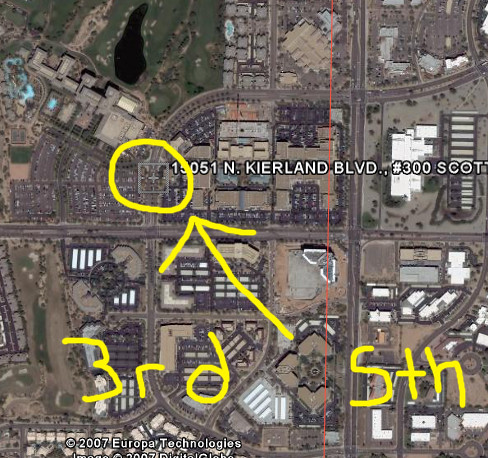
Shadegg's interest isn't too surprising, considering that DRMS's main contractor, Government Liquidity LLC is located in the Pheonix suburb of Scottsdale. A quick check of Arizona's Congressional map puts Scottsdale inside Shadegg's 3rd District.

Aside from Shadegg's personal political interest in DRMS sales, I do agree with his sentiment as a fellow taxpayer. The Department of Defense should try to recoup some of its costs by surplusing excess or antiquated hardware -- but that's just me.

I can also see why the DRMS folks are taking the cautious route by choosing to scrap a larger percent of their surplus. Sure, Camelbaks, binoculars and boots seem like fairly innocuous items, but if they are "specifically designed, developed, configured, adapted, or modified for a military application," they may be classified as defense articles under part § 120.3 of the International Trafficking in Arms Regulation.

When it comes to items that have commercially-available equivalents, defense article determinations are up to State Department policy wonks and Immigration and Customs Enforcement investigators. There are often few publicly available guidelines for this grey area, so it is easy to see why DRMS is choosing to err on the side of caution by scrapping everything that raises questions.

None of this is the fault of DRMS, State or ICE. Each agency is simply doing its job in an ambiguous legal environment. This isn't a hard problem to solve either. Congress just needs to decide whether recouping some of the DoD's annual price tag is as important as maintaining the current export control regime and then pick one or the other. Its not realistic for the Congress to simply assume that bureaucrats or their contractor minions can overcome these conflicting priorities.

A problem like this requires a political solution crafted by elected officials. Heck, its what we hire them to do.

Update: Reader Tom T. suggests a third route, "Let Shays and Shadegg settle their dispute over DRMS in a bare-knuckle boxing match on the House floor." Normally, I would throw my support behind such a proposal, but I'm afraid the House's Sergeant at Arms would end up indicted like Mike Vick. Zing!

Second Update: J and a few other readers familiar with Scottsdale, Arizona were quick to point out that most of the town is actually located in the 5th Congressional district. Having more than a passing familiarity with that area myself, I looked into the matter shortly after reading the military.com article cited above. With the aid of Scottsdale's Chamber of Commerce and the Congressional districts layer of Google Earth, I discovered that Government Liquidation is indeed in the 3rd distrct by a few hundred feet. Here is a screen capture (the red line is district border):

Wednesday, July 11, 2007

A memo to Vlad and George

To:
George W. Bush, President of the United States of America
Vladamir Putin, President of the Russian Federation

From: The Robot Economist

Subject: Missile defense and arms control -- a grand bargain

It is clear that the United States and the Russian Federation are at an impasse over two issues related to the proliferation of missile technology and nuclear weapons. The first conflict is over the United States' plan to implement a missile defense system, some of which will be based in Europe. The second conflict is over the future of the U.S.-Russian arms control regime that evolved during the Cold War.

This impasse can be easily broken with a grand bargain designed to satisfy each nation's concerns and put U.S.-Russian cooperation on a strong, institutionalized footing. As part of the the bargain, the United States would agree to build both its planned interceptors and radar station within Russian territory. The Russian Federation will participate in managing the system's day-to-day operations, but will also allow the U.S. to protect sensitive technology in a U.S.-only facility on Russian soil. The Russians will also be given access to missile defense technology as part of a U.S.-Russian missile defense development program, but it will only be allowed to sell the resulting technology as part of U.S.-Russian joint ventures. The United States will reserve the right to expand its missile defense system outside of Europe.

The United States will agree to at least a 15-year extension of both the Strategic Ordnance Reduction Treaty (SORT) and the inspection provisions of the first Strategic Arms Reduction Treaty (START). In exchange, the Russian Federation will drop its threats to abandon the Intermediate Nuclear Forces Treaty and defer discussions of additional arms control agreements for at least 10 years.

This bargain delivers what each country desires most. The United States is allowed to have a missile defense system that can shoot down missiles coming from the Near East without threaten Russia. Russia gets to keep the Cold War-era arms control regime around for another generation.

It is by no means a solution to U.S.-Russian strategic relations. Instead, it is designed to tackle the one obstacle that prevents such cooperation, a lack of trust on strategic issues stemming from the Cold War. This lack of trust is an antiquated notion because the quest for national power is no longer a zero-sum game. It is both nations to realize that fact and build a relationship that will ensure both American and Russian strategic power for another generation.

Another paradox of American power

Stephen Biddle summarizes in one paragraph the point I've been trying to make on the Iraq War since late 2003:

If the surge is unacceptable, the better option is to cut our losses and withdraw altogether. In fact, the substantive case for either extreme -- surge or outright withdrawal -- is stronger than for any policy between. The surge is a long-shot gamble. But middle-ground options leave us with the worst of both worlds: continuing casualties but even less chance of stability in exchange. Moderation and centrism are normally the right instincts in American politics, and many lawmakers in both parties desperately want to find a workable middle ground on Iraq. But while the politics are right, the military logic is not.

The United States should either pony up significant amount of blood and treasure that it will take to fix the Bush administration's broken endeavor in Iraq or it should go home. Half measures, including phased withdrawals or "strategic redeployments," will only waste resources and perpetuate an issue that has led to sharp divisions on foreign policy. End of story.

The situation in Iraq highlights another Joseph Nye's paradoxical element of American power, something I like to call the impatient enormity factor. Americans are willing to make enormous sacrifices and take on a significant amount of risk on foreign policies. In return for their sacrifice, however, they expect rapid results to match the scope of that sacrifice. Correct me if I'm wrong, but I think it was George C. Marshall who said that the U.S. public wouldn't abide more than five years of fighting against Germany and Japan. This contrasts significantly with the degree that we celebrate U.S. involvement in World War II as popular and even noble ('greatest generation' anyone?).

Contrast this with the United States' response to the Cold War. Rather than contest Soviet power directly, we picked the relatively low-cost, low-risk route of basing U.S. troops in friendly nations, funding proxy wars and backing tinpot dictators. Sure, we funded an expensive reconstruction programs in post-WWII Europe, but it only lasted four years. The only deviation from this pattern was in Vietnam, but like Iraq, we went in thinking the endeavor was going to be relatively easy and come at a low cost.

We get ensnared in the impatient enormity problem when promise of an easy, low-cost effort does not pan out. The administration of the sitting president takes it as an affront to his re-election prospects and/or legacy. I think we can guess how these scenarios end -- the word 'badly' comes to mind. But that is not the only problem with impatient enormity.

The flip-side of the costly overcommitment is the marginal mission creep. This is a scenario where a low-cost policy (frequently sanctions) is applied to a briefly fashionable cause (Burma, Cuba, Libya, Sudan, Venezuela, etc.). Once the policy is put in place and the now-sated populace and the media loose interest, control over it is ceded to one of three groups: (1) members of Congress on the far left or far right (the activists), (2) members of Congress with a vested in the policy outcome (the lobbied), or (3) fanatical mid-level political appointees (assistant secretary and below).

These groups tend to come into office bent on expanding the current set of policies, but not always. I may complain about the Bush administration's efforts to slowly dismantle the arms control institutions of the Cold War more often, but it is no worse than our mindless sanctions against Cuba and Burma.

But hey, I hear that superpowers don't do windows, so I'm probably just illustrating a useless point.

Friday, June 29, 2007

Of export controls and special relationships

Export controls are probably the least popular, but most important component of nonproliferation policy. They are the where the 'rubber meets the road' when it comes to stopping the flow of technology, weapons and money to proliferators, terrorists and other 'evil-doers.' Despite being both the largest economy and the largest manufacturer in the world, the United States has one of the most obtrusive and tight-fisted export control regimes as well.

Some would argue that this is the result of America's obsession with proliferation and its preference for trade sanctions as punishment, but that is a story for another day...

Booking Danno

So here is the situation: Vermont cop sees kid out tipping cows and a chase ensues. Kid crosses the Canadian border and the cop follows in hot pursuit. Cop loses kid and attempts to return to the U.S., but is arrested by Immigration and Customs Enforcement.

What was his offense, you may ask? Was it his hot pursuit into another sovereign state? No, but he did violate the Arms Export Control Act by bringing his sidearm across the border without either first obtaining an export license from the State Department or declaring it to U.S. customs agents.

Thankfully this situation has yet to occur, but in order to head-off this potentially embarrassing diplomatic incident, the U.S. and Canada are hammering out an international agreement to cover such an eventuality.

Just how far does that 'special relationship' go?

One of Tony Blair's last actions as the British Prime Minister was to quietly sign a defense cooperation treaty with the U.S. that will supposed loosen some of the export restrictions that have been hampering some security cooperation. This is an issue my office in the Pentagon deals with all the time because of the UK's close involvement in FCS and the F-35.

Back in late 2005-early 2006, the UK almost pulled out of the F-35 program after having invested $2 billion in the fighter's development. This was largely because the U.S. was refused to let the Ministry of Defense or British defense contractors hired to performance maintenance and upgrades on the F-35's on board software. The flap was eventually deflated with an agreement that guaranteed access to enough technology to give the British 'operational sovereignty' over their fleet of fighters.

One of the key hang-ups over this issue is how the U.S. and UK define exports. Under the U.S.'s International Trafficking in Arms Regulation, an export occurs whenever you give a controlled item or piece of information to a foreign person, firm or government. The UK system, on the other hand, merely applies the movement of items and information across geographical locations. The key difference here being that giving a foreign an U.S. export-controlled item in the U.S. constitutes an export, but the same would not be true of UK export-controlled items in the UK. This largely stems from the fact that the UK, like Canada and many European nations, cannot discriminate on the basis of nationality (i.e. dual citizens and non-permanent residents), whereas the U.S. does.

The interesting part of this latest agreement is the extent to which the UK is doing back flips in order to relieve export license requirements. The exact text of the treaty hasn't been released yet (we don't even have a copy at work), but the Society for British Aerospace Companies released a summary of its high points. I was particularly surprised to read the following paragraph:

Currently, information and material supplied by the US to the UK is usually passed under individual export licenses issued by the US Government to the exporter. This is protected by the receiving company in the UK as part of its contractual relationship with the US supplier, but this protection is not subject to UK legal constraints. In future, information and material supplied from the US under the treaty will have a UK security classification attached to it, which means that its handling is subject to the UK Official Secrets Act (OSA) and therefore enforcement action by HMG in the event of any transgression. This is a major departure for HMG, which has hitherto not offered any UK-based legal protection for the handling of material exported under license from the US. The step is particularly significant as the OSA covers any unauthorised transmission of classified items, irrespective of where it happens geographically or of the nationality of the recipient, whereas UK export controls apply only to the physical transmission of items outside of the UK. The significance of this step by HMG should not be under-estimated, but the British government believes it to be justified as an enabler for an improvement in the flow of sensitive material between the UK and US.

So if SBAC is reading the treaty correctly, the UK has gotten around the difference in our two export control regimes by agreeing to treat U.S.-origin export-controlled information and items as if it were classified -- even if it was not classified by the U.S. government. This extra layer of protection will apparently be enough to allow for unrestricted retransfer within an 'approved community' in the UK.

I won't comment on the UK's decision, but I will say this: Does anyone know the name of the firm that makes classified information safes for the UK government? It is time to invest in that company's stock because this treaty will lead to an explosion in the amount of classified information held by the UK government and its defense contractors.

Wednesday, June 20, 2007

The best documentary I've seen in years

If you have a free hour this evening, watch Frontline's documentary "Endgame" (its available for free on the website). It is quite possibly the most detailed and even-handed account of what went wrong in post-invasion Iraq I have ever seen. It really plumbs the depths of how the Bush administration's desire to play politics with the war and prioritize photo-ops over strategy sessions has created the quagmire we are in today.

On the flip-side, the documentary also makes an excellent case for supporting the "surge/escalation/bananaphone" being carried out by counterinsurgency and peacekeeping nerd Gen. David Petraeus. To be honest, I'm inclined to support the new counterinsurgency strategy if it means we might be setting the Iraqis on a future path that is not marred by violence. Its sad that the Bush administration has politicized the conduct of this way so much that writing what I writing the previous sentence leaves me with mixed feelings and a bad taste in my mouth.

Sunday, June 17, 2007

Romney/Obama Foreign Affairs essay roundup

The much talked-about July/August issue of Foreign Affairs arrived in the mail yesterday. It features essays on foreign policy from 2008 presidential candidates Barak Obama and Mitt Romney.

Both essays were pretty weak, but Romney's was just atrocious. If there is one reason for you to vote against him, let it be the contradiction between his description of the "defining challenge of our generation":

In the current conflict, the balance of forces is not nearly as close as during the early days of World War II and at critical points during the Cold War. There is no comparison between the economic, diplomatic, technological, and military resources of the civilized world today and those of the terrorist organizations and states that threaten it. Perhaps most important is the incredible resourcefulness of the American people and their unmatched education, inventiveness, and dedication. But today's threats are fundamentally different from those we grew used to confronting during World War II and the Cold War. Our enemies now have sleeper cells rather than armies. They use indiscriminate terror rather than tanks. Their soldiers -- as well as their victims -- include children. They count radical clergy among their generals. They communicate via the Internet. They recruit in schools, houses of worship, and prisons. They pursue nuclear weapons not as a strategic deterrent but as an offensive tool of terror.

And his first policy prescription:

The Bush administration has proposed an increase in defense spending for next year. This is an important first step, but we are going to need at least an additional $30-$40 billion annually over the next several years to modernize our military, fill gaps in troop levels, ease the strain on our National Guard and Reserves, and support our wounded soldiers. Looking at military spending over time as a percentage of GDP provides an interesting perspective. During World War II, the United States made huge sacrifices, investing more than a third of its economic activity to fight the war. As we confronted different enemies, such as those in Korea, our investment in defense responded accordingly. Since then, slowly but surely, it has decreased significantly. Through the buildup under President Reagan, it reached six percent of GDP in 1986 and helped turn the tide against the Soviet Union. Yet during the Clinton years, defense spending was dangerously reduced. More recently, although spending has increased, less than four percent of our GDP has been devoted to baseline defense spending. These ebbs and flows stemming from political dynamics have increased the costs and the uncertainty of our military preparedness.

The next president should commit to spending a minimum of four percent of GDP on national defense. Increased spending should not mean increased waste, however. A team of private-sector leaders and defense experts should carry out a stem-to-stern analysis of military purchasing. Accounts need to be thoroughly scrutinized to eliminate excessive contractor and supplier charges and prevent deals for equipment and programs that do more for politicians' popularity in their home districts than for the nation's protection. Congress needs to set stricter lobbying rules and keep a far more watchful eye on self-serving politicians, current and past, in regard to these matters.

So even though we completely outmatch the terrorists in resources and ingenuity, we have to grossly outspend them as well? I'd also like to see him try to enforce fiscal discipline on the military and the Congress. Let it be known that fighting the defense establishment can hazardous to the health of your SecDef. The rest of the essay is pretty incoherent and clearly demonstrates that he no grasp on why the Goldwater-Nichols Act of 1986 actually worked when other attempts at bureaucratic reform didn't.

Obama's essay was a little better, but it felt pretty light on substance. He spends a good deal of the essay invoking the leadership of Roosevelt, Truman and Kennedy, but never really defines himself as a leader. The bulk of the essay consists of paeans to fashionable Democratic foreign policy causes with no clear sense of policy priority. The most developed portion of the essay was on nuclear nonproliferation, which shouldn't be surprising considering that Obama has been under Sen. Dick Lugar's tutelage in the Senate Foreign Relations Committee for the last three years:

As president, I will work with other nations to secure, destroy, and stop the spread of these weapons in order to dramatically reduce the nuclear dangers for our nation and the world. America must lead a global effort to secure all nuclear weapons and material at vulnerable sites within four years -- the most effective way to prevent terrorists from acquiring a bomb.

This will require the active cooperation of Russia. Although we must not shy away from pushing for more democracy and accountability in Russia, we must work with the country in areas of common interest -- above all, in making sure that nuclear weapons and material are secure. We must also work with Russia to update and scale back our dangerously outdated Cold War nuclear postures and de-emphasize the role of nuclear weapons. America must not rush to produce a new generation of nuclear warheads. And we should take advantage of recent technological advances to build bipartisan consensus behind ratification of the Comprehensive Test Ban Treaty. All of this can be done while maintaining a strong nuclear deterrent. These steps will ultimately strengthen, not weaken, our security.

As we lock down existing nuclear stockpiles, I will work to negotiate a verifiable global ban on the production of new nuclear weapons material. We must also stop the spread of nuclear weapons technology and ensure that countries cannot build -- or come to the brink of building -- a weapons program under the auspices of developing peaceful nuclear power. That is why my administration will immediately provide $50 million to jump-start the creation of an International Atomic Energy Agency-controlled nuclear fuel bank and work to update the Nuclear Nonproliferation Treaty. We must also fully implement the law Senator Richard Lugar and I passed to help the United States and our allies detect and stop the smuggling of weapons of mass destruction throughout the world.

Finally, we must develop a strong international coalition to prevent Iran from acquiring nuclear weapons and eliminate North Korea's nuclear weapons program. Iran and North Korea could trigger regional arms races, creating dangerous nuclear flashpoints in the Middle East and East Asia. In confronting these threats, I will not take the military option off the table. But our first measure must be sustained, direct, and aggressive diplomacy -- the kind that the Bush administration has been unable and unwilling to use.

As I read it, Obama is interested in the CTBT, the Fissban treaty, an international nuclear fuel bank, cooperative threat reduction. He also poop-poos the rush to field the RRW and says diplomacy would be the core of his nonproliferation policy to Iran and North Korea. Can't say I disagree when any of that.

Saturday, June 16, 2007

The Internet hearts Ron Paul

According the front page of the Saturday Post, Ron Paul is making a big splash on the Internet:

On Technorati, which offers a real-time glimpse of the blogosphere, the most frequently searched term this week was "YouTube."

Then comes "Ron Paul."

The presence of the obscure Republican congressman from Texas on a list that includes terms such as "Sopranos," "Paris Hilton" and "iPhone" is a sign of the online buzz building around the long-shot Republican presidential hopeful -- even as mainstream political pundits have written him off.

Rep. Ron Paul is more popular on Facebook than Sen. John McCain (R-Ariz.). He's got more friends on MySpace than former Massachusetts governor Mitt Romney. His MeetUp groups, with 11,924 members in 279 cities, are the biggest in the Republican field. And his official YouTube videos, including clips of his three debate appearances, have been viewed nearly 1.1 million times -- more than those of any other candidate, Republican or Democrat, except Sen. Barack Obama (D-Ill.).

[snip]

But while many Democrats have welcomed the young and fresh-faced Obama, who's trailing Sen. Hillary Rodham Clinton (D-N.Y.) in most public opinion polls, Paul is barely making a dent in the Republican polls.

Republican strategists point out that libertarians, who make up a small but vocal portion of the Republican base, intrinsically gravitate toward the Web's anything-goes, leave-me-alone nature. They also say that his Web presence proves that the Internet can be a great equalizer in the race, giving a much-needed boost to a fringe candidate with little money and only a shadow of the campaign staffs marshaled by Romney, McCain and former New York mayor Rudolph W. Giuliani.

lol. That reminds me, I'm hosting a MeetUp meeting at my rustic log cabin/militia compound in Winchester this weekend...

No, seriously, Ron Paul has long been the golden boy of the Republican (and Democratic) libertarians. The only problem is that the libertarian population is relative small relative to other ideological groups -- just check out this handy Pew Center report on popular ideologies done last year. Whereas liberals, conservatives and populists each represent at least 15% percent of the population, libertarians only register around 10%.

This has lead to endless debate in the libertarian camp about winning strategies. Traditionally, the Libertarian Party and libertarians among the Dems and Republicans have chosen to gather around a handful of candidates with libertarian views. Young, Internet-savvy libertarians have been taking a different approach by actively trying to sell the libertarian ethos to the 40% of America that registers as ideologically ambivalent. Just look at the Freedom Democrats, a group of 20 and 30-something libertarians who identify with the Democratic Party. Ron Paul has been their patron saint for years and they spend a good deal of time arguing with the folks over at dKos about the ills of populism and protectionism.

Thursday, June 14, 2007

China wants military power = Duh...

I'm growing so tired of boring pieces on China's military modernization. The latest example: American Enterprise Institute scholar Gary Schmitt's real snoozer in the op-ed section of today's Post:

Obviously, greater transparency by the Chinese would be helpful. But absent a significant shift toward political liberalization in China, there's no reason to expect that to happen. And anyway, after a decade and a half of military buildup, do we really need greater transparency to understand what China is up to?

The Chinese are a proud people and they want to be seen as a powerful, potentially dominant, state. And power, they understand, includes not only a strong economy but a powerful military. When the Chinese look at the world today, who gets in their way most of the time? It's certainly not the Europeans, who have economic strength but little hard power. It's the United States.

There is a tendency on the part of American Sinologists to think that China's "peaceful development" precludes it from craving what all rising powers before it have craved -- power and recognition. Yet the Chinese don't think the two are opposed at all. They view a growing economy as critical to solving their domestic problems, but they also know that it is critical to providing the resources for military modernization and expansion.

The lack of transparency is, if anything, a dodge we've used to avoid dealing with the real problem: China's ambitions to be as great a power as it can be. It's understandable, perhaps, that with all that is on America's plate at the moment, we're not inclined to add China. But that doesn't change the fact that Beijing believes the more military power it has, the more likely it is that those ambitions will be fulfilled.

I'll be the first person to agree with Mr. Schmitt's point here. China's military build up is almost entirely based its desire to amass national power. Since the end of the Cold War and its opening to investment from the West, threats against China have declined precipitously. There is an argument that modernization can sometimes reduce a military's long-term cost, but it would be hard to quantify this argument without reliable information on the PLA's current operating costs.

The problem is that Mr. Schmitt's argument does not answer two questions that are far more important:

Is this actually a threat?: The reason why American Sinologists pour over Chinese policy documents and lament about the PLA's lack of transparency is that foreign military power itself is not a threat. After the U.S., the next largest military spenders are the United Kingdom, France, Germany and Japan -- all of which are U.S. allies. One could easily argue that their $233 billion will be used against us any time soon. China is more of a black box. Do they plan on using their military to support the current U.S.-backed status quo or will they attempt to revise it? If they do intend to revise the status quo, how far are they willing to go to meet their objectives? These questions will lead to highly divergent requirements for the U.S. military that come with different future forces and price tags.

What can we do about it?: The U.S.'s military capabilities currently dwarf those of China and this is likely to continue for decades. Even China comes close to catching up, what can we do about it? U.S. military spending is pretty close to its budgetary limits and the Chinese have the sovereign right to build a military within the limits of international law. What does Mr. Schmitt propose we do if China's capabilities begin to rival our own? Raise taxes and increase defense spending? Launch a pre-emptive strike on China's materiel factories? Attempt to stifle Chinese economic growth?

China's interest in amassing military power tells me nothing. At the same time, "American preeminence" is an end state, not a strategy. Mr. Schmitt should come back when he has something interesting to say.

Friday, May 25, 2007

Gerson calls it like it is

I'm only the second generation of my family born in America, so I'll admit I'm a little sensitive about the current debate over immigration. One thing that really gets on my nerves is the idea that immigration threatens "our culture." America is nation of immigrants, so it is not bound by a cultural identity like many other states. The assertion that America has a cultural identity and that this identity can be subverted by demographic change feels almost racist to me.

Apparently, I'm not the only one. Former Bush administration speech writer Michael Gerson wrote a wonderful op-ed in today's Post about how this attitude may hurt the Republican Party's future:

In 1882, Congress passed and President Chester Arthur signed the Chinese Exclusion Act. Today we don't name laws as bluntly as we used to. But anti-immigrant sentiments are very much alive, this time expressed in opposition to the Comprehensive Immigration Reform Act of 2007.

For a certain kind of conservative, any attempt to grant a legal status to illegal immigrants is as welcome as salsa on their apple pie. One conservative commentator claims that the law is "going to erase America" -- an ambition even beyond Ted Kennedy's considerable powers. Another laments that "white America is in flight" -- and presumably not just to Jackson Hole or Nantucket for the summer.

[snip]

But the real passion in this debate is not political, it is cultural -- a fear that American identity is being diluted by Latino migration. Tancredo is the lowbrow expression of this fear. Professor Samuel Huntington of Harvard University, whom Tancredo calls an intellectual mentor, presents the highbrow version. Huntington argues that Mexican migration is a threat to American unity and to the "core" of our cultural identity. "America," he says, "was created as a Protestant society just as and for some of the same reasons Pakistan and Israel were created as Muslim and Jewish societies in the 20th century."

[snip]

Yet these are precisely the people that Tancredo Republicans are alienating. Not all Hispanics view immigration favorably, but 100 percent resent being targets of suspicion. When I talked this week with the Rev. Samuel Rodriguez Jr., a prominent Hispanic evangelical, he said of congressional Republicans: "This is a party closing its door to us, hijacked by extremists."

"All I hear," he told me, "from conservative leaders I work with, very socially conservative people, is, 'I can't continue to vote for a party that is exposing threads of bigotry and racism.' " Conservatives need to be reminded that Latinos -- Protestant and Catholic -- are, in some ways, different from the mainstream culture. Higher percentages attend church regularly. Higher percentages of Latino immigrants are married; lower percentages are divorced. "The elephant in the room," says Rodriguez, "is the Latinoization of America. What are the results? America will be a more religious nation. America will continue to be a nation that promotes family values. Wow, that really turns American culture upside down."

I'm extremely suspicious of nativism and populism, so I would have probably voted Republican in a different era. Not today though. Democrats may have a propensity for dovishness, populism and protectionism, but you can at least haggle with them over policy.

Republicans, meanwhile, have taken a page from the Confucian obsession with virtuous leadership: "To govern by virtue, let us compare it to the North Star: it stays in its place, while the myriad stars wait upon it." Sound familiar?

Thursday, May 24, 2007

Is the U.S. becoming too risk averse?

UCSD professor and former Clinton administration official Richard Feinberg wrote an interesting op-ed piece in today's Post describing how U.S. embassies are turning into fortresses:

With threats to American power growing stronger and American prestige slipping around the world, our professional Foreign Service officers are more crucial than ever. Unfortunately, our approach to their security is making it almost impossible for many of them to do their jobs. Marooned in fortress-like embassies, cut off from the societies where they should be gathering intelligence and spreading American values, too many of them might as well be surveying the landscape from offices in Washington.

U.S. embassies are increasingly becoming like medieval fortresses -- remote, foreboding, impenetrable. Perched on suburban hilltops safely distant from more dangerous urban centers, they sit behind layers of high-security fences, reinforced concrete walls, thick glass windows and squads of armed guards.

[snip]

In violent cities, draconian security measures may be necessary. Diplomats in Baghdad inhabit the famous Green Zone, which generally shields them from car bombs and suicide bombers, even as U.S. intelligence has suffered from these separations. But this solution to extreme threats hardly seems warranted in most capitals. Yet in calm cities, from Singapore to Santiago, garrison embassy compounds are becoming the rule as strict security measures are standardized throughout the world.

Many security measures predated the Sept. 11, 2001, attacks and even the 1998 bombing of our embassies in East Africa. After the 1983 attack on the U.S. Marine barracks in Beirut, new embassies began to take on the fortress architecture, and tightened security was prioritized over diplomatic function. Certainly, when danger is demonstrable, smart security upgrades are warranted; security measures can partially be compensated for by attractive landscaping, and the loss of physical accessibility can be partially replaced by interactive Web sites. But in most places, the fortress embassies are overkill.

Yes, it's a dangerous world, but so is policing our own cities, and we do not suggest that police officers remain barricaded behind their precinct walls. Just the opposite: We now instruct law enforcement officers to walk the streets in their communities, believing that this is the best long-term approach to improving relations with citizens and, ultimately, reducing risk to the officers themselves.

Nor will it ever be possible to eliminate risk for overseas assignments, and attempts to do so become ever more expensive and self-defeating. The only foolproof way to eliminate risk to our diplomats is to bring them home. Better to restore a more considered balance between absolute security and diplomatic effectiveness -- and for the nation to recognize that diplomats, no less than soldiers, accept a degree of risk when they enlist.

I can commiserate with Mr. Feinberg's point. Two years after 9/11, I spent a summer working a U.S. consulate in Japan that was right on a major thoroughfare in the heart of a major Japanese city. The atmosphere of the facility was pretty open -- there were no concrete barriers on the sidewalk and the building's security detail was small cadre of polite Japanese security guards. The staff was so committed to this approach that they wouldn't even let a credible terrorist threat that copped up nearby hamper operations. In the end, their approach really paid dividends for the consulate in terms of public diplomacy and connecting to the local community.

Is this issue just part of a growing preference for risk averse foreign policies in the United States? One could easily see the parallels between the embassy issue and the public's obsession with "protecting our troops" by cocooning them in bulky body armor and increasingly heavy armored cars.

What about national security policy in general? Aren't programs like missile defense, prompt global strike, and the robust nuclear earth penetrator designed to substitute for policies that entail the risk of relying on the cooperation of foreigners -- such as cooperative security, international regimes and diplomacy?

Wednesday, May 23, 2007

FCS quote of the month

From Renae Merle's article in last Friday's Post (which I can't believe I missed):

In a statement released Wednesday, the White House said that it "strongly opposed" the cuts to FCS, asserting that it would "force the Army to retain its Cold War hardware (developed in the 1970s and fielded in the 1980s) well beyond 2040, preventing our soldiers from fielding the best available equipment in the future."

That's funny. If you read their latest Modernization Plan, the Army clearly feels its "Cold War hardware" is good enough for 30 of the Army's 45 active-duty Brigade Combat Teams to use through 2030. Its not even clear that the Army plans to eventually replace all of its BCTs with FCS after 2030.

I'm amazed to see the White House play the same procurement shell game that they shot down back in 2002 when the Army tried to save the XM2001 Crusader self-propelled howitzer. This is all beside the fact that the Army is procuring hundreds of new tanks, trucks and aircraft to replace ones that were damaged, destroyed or worn down in Iraq -- to the tune of $17.1 billion in 2007 alone.

Sunday, May 20, 2007

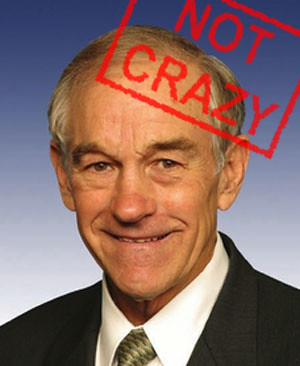
Ron Paul is not crazy

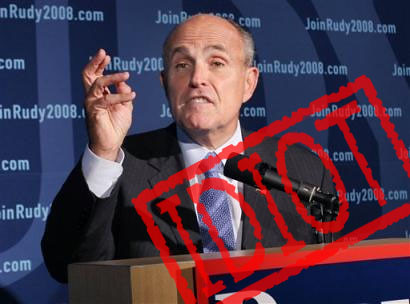
I'm more of a policy wonk, so I don't like to wade too deeply into politics, but I feel the need to defend my fellow libertarian, Congressman Ron Paul (R-TX). He made a seemingly controversial statement in the May 15, 2007 Republican primary debate and Rudy Giuliani scored some cheap points off of it. Conservative blogs are predicting that the statement will cost him his chance at the Republican nomination, which is too bad because the congressman's point was not insigniciant to the U.S. Near East policy debate. In fact, the whole exchange with Giuliani was indicate of an important failure of U.S. strategy:

MR. GOLER: Congressman, you don't think that changed with the 9/11 attacks, sir?

REP. PAUL: What changed?

MR. GOLER: The non-interventionist policies.

REP. PAUL: No. Non-intervention was a major contributing factor. Have you ever read the reasons they attacked us? They attack us because we've been over there; we've been bombing Iraq for 10 years. We've been in the Middle East -- I think Reagan was right.

We don't understand the irrationality of Middle Eastern politics. So right now we're building an embassy in Iraq that's bigger than the Vatican. We're building 14 permanent bases. What would we say here if China was doing this in our country or in the Gulf of Mexico? We would be objecting. We need to look at what we do from the perspective of what would happen if somebody else did it to us. (Applause.)

MR. GOLER: Are you suggesting we invited the 9/11 attack, sir?

REP. PAUL: I'm suggesting that we listen to the people who attacked us and the reason they did it, and they are delighted that we're over there because Osama bin Laden has said, "I am glad you're over on our sand because we can target you so much easier." They have already now since that time -- (bell rings) -- have killed 3,400 of our men, and I don't think it was necessary.

MR. GIULIANI: Wendell, may I comment on that? That's really an extraordinary statement. That's an extraordinary statement, as someone who lived through the attack of September 11, that we invited the attack because we were attacking Iraq. I don't think I've heard that before, and I've heard some pretty absurd explanations for September 11th. (Applause, cheers.)

And I would ask the congressman to withdraw that comment and tell us that he didn't really mean that. (Applause.)

MR. GOLER: Congressman?

REP. PAUL: I believe very sincerely that the CIA is correct when they teach and talk about blowback. When we went into Iran in 1953 and installed the shah, yes, there was blowback. A reaction to that was the taking of our hostages and that persists. And if we ignore that, we ignore that at our own risk. If we think that we can do what we want around the world and not incite hatred, then we have a problem.

They don't come here to attack us because we're rich and we're free. They come and they attack us because we're over there. I mean, what would we think if we were -- if other foreign countries were doing that to us?

The Congressman's statement about al Qaeda's motivations leading up to the September 11, 2001 attacks is only slightly wrong. Ron Paul suggests that our 10-year enforcement of no-fly zones over northern and southern Iraq was a motivating factor for al Qaeda when in fact, it was the UN sanctions placed on Iraq. I direct your attention to the August 1996 fatwa issued by Osama bin Laden and published in the London-based Al Quds Al Arabi newspaper:

The youths hold you responsible for all of the killings and evictions of the Muslims and the violation of the sanctities, carried out by your Zionist brothers in Lebanon; you openly supplied them with arms and finance. More than 600,000 Iraqi children have died due to lack of food and medicine and as a result of the unjustifiable aggression (sanction) imposed on Iraq and its nation. The children of Iraq are our children. You, the USA, together with the Saudi regime are responsible for the shedding of the blood of these innocent children. Due to all of that, what ever treaty you have with our country is now null and void.

Iraq is mentioned again in second fatwa he and Ayman al-Zawahiri published on February 23, 1998:

If some people have in the past argued about the fact of the occupation, all the people of the Peninsula have now acknowledged it. The best proof of this is the Americans' continuing aggression against the Iraqi people using the Peninsula as a staging post, even though all its rulers are against their territories being used to that end, but they are helpless.

Second, despite the great devastation inflicted on the Iraqi people by the crusader-Zionist alliance, and despite the huge number of those killed, which has exceeded 1 million... despite all this, the Americans are once against trying to repeat the horrific massacres, as though they are not content with the protracted blockade imposed after the ferocious war or the fragmentation and devastation.

So here they come to annihilate what is left of this people and to humiliate their Muslim neighbors. Third, if the Americans' aims behind these wars are religious and economic, the aim is also to serve the Jews' petty state and divert attention from its occupation of Jerusalem and murder of Muslims there. The best proof of this is their eagerness to destroy Iraq, the strongest neighboring Arab state, and their endeavor to fragment all the states of the region such as Iraq, Saudi Arabia, Egypt, and Sudan into paper statelets and through their disunion and weakness to guarantee Israel's survival and the continuation of the brutal crusade occupation of the Peninsula.

The 9/11 Commission Report even mentions the subject in Chapter 2 "The Foundations of New Terrorism" (split across pages 48 and 49):

The history, culture, and body of beliefs from which Bin Ladin has shaped and spread his message are largely unknown to many Americans. Seizing on symbols of Islam's past greatness, he promises to restore pride to people who consider themselves the victims of successive foreign masters. He uses cultural and religious allusions to the holy Qur'an and some of its interpreters. He appeals to people disoriented by cyclonic change as they confront modernity and globalization. His rhetoric selectively draws from multiple sources-Islam, history, and the region's political and economic malaise. He also stresses grievances against the United States widely shared in the Muslim world. He inveighed against the presence of U.S. troops in Saudi Arabia, the home of Islam's holiest sites. He spoke of the suffering of the Iraqi people as a result of sanctions imposed after the Gulf War, and he protested U.S. support of Israel.

I am not endorsing Osama bin Laden's view. Nor am I saying that the 9/11 attacks were invited or justified. My point is that when Osama bin Laden declared war on the United States, he included his rationale and that rationale obviously appealed to some in the Near East.

It is true that Congressman Paul was inarticulate in making his point, but Rudy Giuliani's dismissive response indicated a foreign policy myopia that could be potentially dangerous for the United States. We may see Osama bin Laden's view as morally wrong, but the 19 hijackers on 9/11 clearly disagreed, so much so that they were willing to sacrifice their lives for it. This tendency to dismiss what it disbelieves will only continue to impose a heavy opportunity cost on U.S. strategy. If Rudy wins the election, we can only hope that he reads some Sun Tzu before moving into the White House. I'm thinking specifically about a passage from the Art of War at the end Chapter 3:

So it is said that if you know your enemies and know yourself, you will win hundred times in hundred battles. If you only know yourself, but not your opponent, you win one and lose the next. If you do not know yourself or your enemy, you will always lose.

Hey, at least we understand ourselves... right?

OMG, he's got the pox!

The New York Times had an interesting article in its Friday edition (h/t to DR) about a 2-year old Indiana boy who got a viral infection from his smallpox-inoculated father:

Experts said the father, who had eczema in childhood, should never have been given the vaccine because that fact made him more susceptible to side effects like vaccinia infection. And they said military doctors should have been doubly cautious because the son, too, suffered from eczema and would have been highly susceptible to infection. Military procedures call for asking about such conditions in soldiers and their families.

Vaccinia is the live virus used in smallpox vaccine. After vaccination, the body develops a resistance to vaccinia, a disease that is generally milder than smallpox, and the resistance also works against smallpox. The injection site can spread the vaccinia virus, however, and people without strong immune systems are particularly susceptible.

Smallpox was officially declared eradicated by the World Health Organization in 1979, and inoculation of military personnel was suspended in 1990. But after the terrorist attacks of Sept. 11, 2001, and the subsequent cases of anthrax sent through the mail, the government began vaccinating military personnel and many health care workers, with 1.2 million vaccinated as of March of this year.

Since then, a handful of vaccinia cases have been reported to the Centers for Disease Control and Prevention, including one, described in the May 4 Morbidity and Mortality Weekly Report, of vulvar infection in an Alaskan woman whose sex partner was a serviceman.

I imagine that is all a little confusing, so I will briefly explain the history of the smallpox vaccine. Before 1796, the only way to protect someone against smallpox (Latin name: Variola) was inoculation, or purposefully infecting a subject with the smallpox virus in a controlled fashion. There is some debate over whether the first smallpox inoculation originated in China or India, the practice had been around for almost 600 years before it the West adopted the idea in the 17th Century.

Vaccination is the practice of introducing weak or dead pathogens into a subject and smallpox vaccine was the first ever vaccine. In the late 18th Century, British country doctor Edward Jenner realized that milkmaids who contracted and recovered from cowpox (Latin name: Vaccinia) rarely contracted smallpox. This discovery had huge implications because up until that point smallpox inoculation practices could only manage the disease's mortality rate. It could leave a person bed-ridden for up to two weeks and he/she would remain infectious for up to four weeks. Inoculation also only reduced, but could not reliably prevent smallpox's painful symptoms and sometimes permanent scaring.

This article is slightly ironic because few Americans realize that smallpox inoculation was a huge issue for the U.S. Army during the Revolutionary War (scroll down to the "The Army inoculated against smallpox"). A smallpox outbreak among the troops was a major factor leading to the failure of Benedict Arnold's expedition into Quebec in 1775. George Washington's decision to lay siege to Boston from April 1775 to March 1776 was also influenced by a smallpox outbreak in the city that year. There are even claims that British general Thomas Gage used biological warfare by sending smallpox infected Bostonians out of the city and into Washington's siege lines.

While British mandated compulsory inoculation for their troops, puritanical Americans were reluctant because the practice was seen as "going against God's will." This gave the red coats a significant upper hand during the opening years of the Revolutionary War. The Continental Army's commander, George Washington, was very cautious about exposing his non-immune troops to smallpox because of his own experience with the disease as a child. During a trip to Barbados, a smallpox infection not only robbed him of his surrogate father, Lawrence Washington, it permanently scarred his face and is probably the reason for his sterility later in life.

Washington was, therefore, a big proponent of preventive medicine in general and smallpox inoculation in particular. The Continental Congress and state governments resisted him at first, but the dire conditions and high smallpox infection rate at the winter encampment at Valley Forge forced him to take decisive action. He ordered his medical staff to begin inoculating the Continental Army and required universal inoculation for all new recruits. Many historians have credited this move, along with the training regime of Prussian drillmaster Baron Friedrich von Steuben as key to the Continental Army's turnaround in 1777-1778. One could even argue that it was "business process transformation."