Showing posts with label Export Controls Are Fun. Show all posts

Thursday, September 6, 2007

They did it again

First of all, I can't believe I totally scooped the ExportLawBlog on this story. Clif Burns runs a tight ship over there, so I'm assuming this is the one and only time I will beat him to an export control story.

What is left for an administration that has secretly signed and negotiated a treaty with India that punches a huge hole in our nuclear export control regime and another that punches a hole in defense export procedures for Great Britain? Go for a hat trick by steathly negotiating and signing a similar arms trade treaty with Australia!

In a very low-profile meeting on September 5th, President Bush and long-serving Australian Prime Minister John Howard did just that. The State Department issued a fact sheet on the subject that is pretty light on the details, but I would bet that the Aussies are getting the same deal with gave the Brits a few months ago.

Both Bush and Howard mentioned the treaty at their 'joint press availability' that day. Howard's statement danced around the details and as usual, Bush's statement was so inarticulate that he didn't need to do the same.

Frankly, I am a little surprised by this latest defense trade treaty on two accounts. Some of the folks in the defense cooperation community of the Pentagon were at least aware of the British DTCT a few months before it was signed. The Australian treaty, on the other hand, came as a complete surprise.

Moreover, I am surprised that the Bush administration signed a second DTCT before securing the first one. They have no conception of how the Senate will react when the first DTCT comes up for Congressional review. It is also my understanding that the U.S.-UK implementing arrangements are still being hammered out between State, the Office of the Secretary of Defense and the British Ministry of Defence.

Bringing the Aussies to the table right now is probably going to spread our already over-tasked U.s. negotiators out even more -- and I would know, they are about 2 months behind on approving some agreements my office has negotiated.

I hear one OSD lawyer is so busy that he has to come in on Saturday and Sunday just to do his regular office work. If I was in his position, I would just walk away from that job. Life is way to short.

Thursday, August 16, 2007

Congress hearts Iran sanctions too

Galrahn, the Armchair Admiral, recommended that I also do an analysis of the Iran sanctions bills currently moving through the House and Senate.

One of these three bills is the "Iran Sanctions Enabling Act of 2007" that was originally sponsored by Representative Barney Frank (D-MA) and introduced in the House in May.

HR.2347 "Iran Sanctions Enabling Act of 2007"

The bill orders the Department of Treasury to maintain a list of foreign or U.S. persons who have invested more than $20 million in the Iranian oil industry. It then gives investors who divest themselves from a person on the Treasury list a safe harbor from civil, criminal and administrative actions and suits against the divestiture.

It also makes it the policy of the United States to support decisions by state and local governments and educational institutions to divest themselves from persons who are on the Treasury list.

The bill was passed by a hefty margin (408-6) in the House in early July and was introduced in the Senate in early August. I know socially responsible investing is really popular with folks on the left, but I bet the tangible impact of this Representative Frank's bill will be marginal.

The other two bills share the title "Iran Counterproliferation Act of 2007" and share most of the same content. The House version was introduced in March 2007 by Representative Tom Lantos (D-CA).

HR.1400 "Iran Counter-Proliferation Act of 2007"

The Lantos bill closes off the exemptions for the importation of Iranian rugs, foodstuffs and informational materials and the exportation of civil aviation safe equipment. Not surprisingly, exemptions for medicine and food exports are left alone, no doubt the handiwork of the pharmaceutical and farm lobbies.

It also mandates the President impose six types of sanctions on persons found to be violating the Iran Sanctions Act of 1996. Currently, the President is only require to impose two sanctions from a list that includes exclusion from the U.S. financial system, being listed as a denied party under all of the major export control regulations and disbarment from doing business with the U.S. government. It also removes the President's ability to waive these sanctions under any circumstances.

The bill also makes the foreign subsidiaries of any U.S. company subject to the Iran Sanctions Act by making the parent company liable for the subsidiary's sanctions busting. The definition of a foreign subsidiary is also defined down from super majority ownership to simple majority ownership.

Ironically, Lantos's bill would require that the executive list the Iranian Revolutionary Guard Corp as a 'specially designated global terrorist,' a 'foreign terrorist organization' and a 'weapons of mass destruction proliferator.'

S.970 "Iran Counter-Proliferation Act of 2007"

The Senate version of this bill was introduced shortly after the Lantos bill in March 2007 by Senator Gordon Smith (D-OR).

The only major difference between the House and Senate bills is that the Senate takes the additional step of negotiation and implementation of a U.S.-Russian 123 agreement until the President can certify that Russia has stopped assisting the Iranian nuclear program.

Given the broad scope of unilater U.S. sanctions already imposed on Iran and persons who deal with Iran, I imagine the impact of any of these measures will be marginal as best. At worst, they will have no impact on Iran while driving a larger wedge between Russia, Europe and the U.S.

Wednesday, August 15, 2007

What's better than sanctions? More sanctions!

I had to produce an primer for my boss and coworkers today about the Bush administration's decision to declare the Iranian Revolutionary Guard Corp a 'specially designated global terrorist' and I figured I would share it with my readers:

What happened?

The United States Government designated the Iranian Revolutionary Guard Corps, a subset of the Iranian military, to be a 'specially designated global terrorist group' pursuant to the rules of Executive Order 13224 signed by President George W. Bush on September 23, 2001.

What is Executive Order 13224 and what is an SDGT?

E.O. 13224 allows the U.S. Government to block the property of any person (including corporate persons) in the U.S. that is listed in the order's annex. It also allows the government to block transactions between U.S. persons and anyone listed in the annex.

The Secretary of the Treasury, Secretary of State or Attorney General also have the power to declare a U.S. person or person within the U.S. as being subject to the limitations imposed by the order. The grounds for such a declaration are if that person has 'committed or poses a significant risk of committing acts of terrorism that threaten the security of U.S. nationals or the national security, foreign policy, or economy of the U.S.' or if that person has 'assisted, sponsored, or provided financial, material or technological support or other services' to support acts of terrorism or to persons listed in the annex.

SDGT is just a fancy way of referring to the individuals and groups on in the E.O.'s annex. The simplified list of SDGTs is 11 pages long, while the detailed list is a little over 100 pages long.

What has changed?

In practice, the 'State Sponsor of Terrorism' designator hasn't translated into the same set of restrictions for each country on the state-sponsors list. For Iran, being on the 'bad boys' list means that no U.S. person or person within the U.S. can trade with or conduct transactions in Iran or with the Iranian Government. There is a narrow exception to this rule for importing Iranian trinkets, information, foodstuffs and, most importantly, Persian rugs, through foreign intermediaries.

Being designated an SDGT closes the Iranian Transaction Regulations' import exemptions on trinkets, food and carpets. It also allows the U.S. government to go beyond merely blocking transactions to actually freezing IRCG assets in the U.S. or held by U.S. persons.

It is not clear whether this change will actually have a tangible impact on the IRCG. The U.S. government seized most Iranian government assets shortly after the 1979 revolution. It has imposed an unilateral embargo on Iran continuously since E.O. 12613 was put in place by the Reagan administration.

There have been so few opportunities to legally acquire any Iranian property that I imagine the number of U.S. persons or persons in the U.S. holding IRCG assets is microscopic.

Is this going to be BDA Redux?:

Maybe. If the SecTreas, SecState and AG decide to use their authority to determine whether someone has assisted or provided support for the IRCG liberally, they could prohibit U.S. persons or persons in the U.S. from doing business with foreign firms that do business with the IRCG and its avatars.

That would be same tactic used by the Treasury Department to pressure Banco Delta Asia in Macau into freezing $25 million in North Korean assets. Iran's economy is less isolated from the world market than North Korea, so it is unclear whether the BDA strategy will be effective in this instance.

Either way, it definitely a bad day to be in the Persian carpet business. Maybe the industry should rebrand their products freedom rugs...

Monday, August 6, 2007

So what's up with these Near East arms deals?

One news item from recent headlines is Bush administration's plans to build up a tighter anti-Iran block in the Near East through arms deals. Specifically, they plan to sell at least $20 billion worth of arms to the members of the Gulf Cooperation Council (Saudi Arabia, Bahrain, Kuwait, Oman, Qatar and the United Arab Emirates), as well as increase the amount of military aid given to Israel and Egypt.

Before I critique the Bush administration's approach, I would like to correct a common misunderstanding about U.S. arms sales to the Near East. First of all, the U.S. sells hundreds of millions of dollars worth of arms to GCC states on an annual basis. Between 2000 and 2006 alone, Saudi Arabia purchased $5.8 billion worth of defense articles and services through the Foreign Military Sales system. We also signed off on direct commercial sales of $1.8 billion worth of U.S. defense articles and services to the Saudis as well. (Both FMS and DCS numbers compiled from annual reports, send me an e-mail if you want them in a spreadsheet.)

The Bush administration is proposing that we relax some of the limitations we have placed on the types of weapons the U.S. can sell to Saudi Arabia. To be fair, some of these restrictions were based on tensions between Israel and its Arab neighbors, so relaxing them now makes sense in the face of recent Arab-Israeli detente. If we're going to sell arms to the GCC states anyways, we might as well sell them as much as we can for practical economic reasons, if not strategic ones. As one Navy-focused blogger points out, if the Saudis can't buy more advanced weaponry from the United States, there are plenty of other relatively advanced arms exporting states willing to fill the gap.

The real flaw of this decision is that it will probably do nothing to achieve its intended goal of adjusting the military balance between the GCC states and Iran. As Bill Arkin aptly points out, the Saudis and their GCC neighbors aren't planning on buying the advanced weapons we are offering in large enough quantities to be useful. His point about the drivers and limitations behind Saudi procurement planning is particularly important. The Saudis will only buy enough JDAMs, F-16s and M1A2s to keep their prince-generals happy. They cannot buy enough to become a force of reckoning the Near East because they afraid of making their military too powerful.

If you take a look at the publicly available Function 150 sales toplines published by the State Department, there appears to be some evidence of this. The Saudis averaged about $700-800 million in arms purchases between 2000 and 2006. If you look at the 655 Reports that the Federation of American Scientists obtained for these years, the largest portion of annual Saudi purchases are for defense services (i.e. maintenance, logistics, administration, training, etc.).

Even though this $20 billion deal will effectively double Saudi spending on arms imports, I am sceptical about how much of this spending will actually go to platforms. History doesn't paint an optimistic picture. If the arms sales only serve as a window dressing on the U.S. side (subject to interpretation) of the military balance across the Persian Gulf and if al Qaeda uses U.S. arms sales to House of Saud as a justification for its mission, then why sell them arms to begin with? The only reason I can think of is that we really have viable alternative.

Our hands are tied by decades of 'lowest common denominator' policy-making capped off by the invasion of Iraq and the complete collapse of the Bush administration's freedom agenda.

Oh well, just add the Near East to the list of Baby-Boomer legacies that my generation will spend their entire careers trying to fix.

Monday, July 30, 2007

Spinning back up

I'm back finally and I'm working on a post about JIEDDO that I hope to wrap up in an hour or two. In the meantime, read this post from the Federation of American Scientists' Strategic Security Blog about the history of the recently signed (but still under wraps) U.S.-UK Defense Trade Cooperation Trade. It also makes a fairly convincing case for why the treaty is bad for America and the legislative process. Good stuff.

Monday, July 23, 2007

DRMS just can't win

As I hinted at back in January, Congress is learning that it can't have it both ways with the Defense Reutilization and Marketing Service:

Of roughly $1.8 billion worth of equipment the Defense Department downgraded to scrap from January through June, at least $330 million worth came from categories of gear the Pentagon most frequently buys back from surplus dealers, according to the National Association of Aircraft & Communication Suppliers. Those include parts for aircraft, weapons and communications systems, the group said.

The association, a lobbying group for surplus dealers, is worried the military's recent decision to shred retired F-14 "Tomcat" fighter jets is the start of a broader effort to destroy Pentagon leftovers that surplus dealers once bought routinely. Iran is aggressively seeking F-14 components for its own aging Tomcat fleet.

[snip]

Rep. John Shadegg, R-Ariz., wrote to Lt. Gen. Robert Dail, director of the Defense Logistics Agency, asking whether surplus equipment is being scrapped, including new items such as Camelbak backpack-style hydration packs.

"I have received reports that usable items such as sleeping bags and gloves, and auto parts such as mufflers, are being scrapped because DRMS has stated that it is unable to identify them," Shadegg wrote in the letter, which was obtained by The Associated Press. The DRMS is the Pentagon's Defense Reutilization and Marketing Service.

Shadegg said he also is concerned about the loss of government revenue from surplus sales and about harm to small businesses in the surplus industry.

Contrast this with what Representatives Shays had to say about DRMS back in January:

"The military should not sell or give away any sensitive military equipment. If we no longer need it, it needs to be destroyed - totally destroyed," said Shays, until this month the chairman of a House panel on national security. "The Department of Defense should not be supplying sensitive military equipment to our adversaries, our enemies, terrorists."

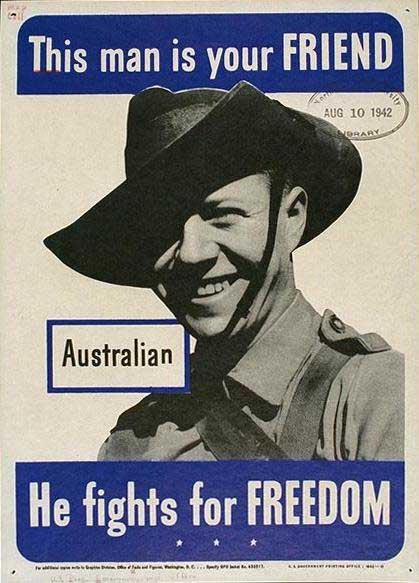
Shadegg's interest isn't too surprising, considering that DRMS's main contractor, Government Liquidity LLC is located in the Pheonix suburb of Scottsdale. A quick check of Arizona's Congressional map puts Scottsdale inside Shadegg's 3rd District.

Aside from Shadegg's personal political interest in DRMS sales, I do agree with his sentiment as a fellow taxpayer. The Department of Defense should try to recoup some of its costs by surplusing excess or antiquated hardware -- but that's just me.

I can also see why the DRMS folks are taking the cautious route by choosing to scrap a larger percent of their surplus. Sure, Camelbaks, binoculars and boots seem like fairly innocuous items, but if they are "specifically designed, developed, configured, adapted, or modified for a military application," they may be classified as defense articles under part § 120.3 of the International Trafficking in Arms Regulation.

When it comes to items that have commercially-available equivalents, defense article determinations are up to State Department policy wonks and Immigration and Customs Enforcement investigators. There are often few publicly available guidelines for this grey area, so it is easy to see why DRMS is choosing to err on the side of caution by scrapping everything that raises questions.

None of this is the fault of DRMS, State or ICE. Each agency is simply doing its job in an ambiguous legal environment. This isn't a hard problem to solve either. Congress just needs to decide whether recouping some of the DoD's annual price tag is as important as maintaining the current export control regime and then pick one or the other. Its not realistic for the Congress to simply assume that bureaucrats or their contractor minions can overcome these conflicting priorities.

A problem like this requires a political solution crafted by elected officials. Heck, its what we hire them to do.

Update: Reader Tom T. suggests a third route, "Let Shays and Shadegg settle their dispute over DRMS in a bare-knuckle boxing match on the House floor." Normally, I would throw my support behind such a proposal, but I'm afraid the House's Sergeant at Arms would end up indicted like Mike Vick. Zing!

Second Update: J and a few other readers familiar with Scottsdale, Arizona were quick to point out that most of the town is actually located in the 5th Congressional district. Having more than a passing familiarity with that area myself, I looked into the matter shortly after reading the military.com article cited above. With the aid of Scottsdale's Chamber of Commerce and the Congressional districts layer of Google Earth, I discovered that Government Liquidation is indeed in the 3rd distrct by a few hundred feet. Here is a screen capture (the red line is district border):

Friday, June 29, 2007

Of export controls and special relationships

Export controls are probably the least popular, but most important component of nonproliferation policy. They are the where the 'rubber meets the road' when it comes to stopping the flow of technology, weapons and money to proliferators, terrorists and other 'evil-doers.' Despite being both the largest economy and the largest manufacturer in the world, the United States has one of the most obtrusive and tight-fisted export control regimes as well.

Some would argue that this is the result of America's obsession with proliferation and its preference for trade sanctions as punishment, but that is a story for another day...

Booking Danno

So here is the situation: Vermont cop sees kid out tipping cows and a chase ensues. Kid crosses the Canadian border and the cop follows in hot pursuit. Cop loses kid and attempts to return to the U.S., but is arrested by Immigration and Customs Enforcement.

What was his offense, you may ask? Was it his hot pursuit into another sovereign state? No, but he did violate the Arms Export Control Act by bringing his sidearm across the border without either first obtaining an export license from the State Department or declaring it to U.S. customs agents.

Thankfully this situation has yet to occur, but in order to head-off this potentially embarrassing diplomatic incident, the U.S. and Canada are hammering out an international agreement to cover such an eventuality.

Just how far does that 'special relationship' go?

One of Tony Blair's last actions as the British Prime Minister was to quietly sign a defense cooperation treaty with the U.S. that will supposed loosen some of the export restrictions that have been hampering some security cooperation. This is an issue my office in the Pentagon deals with all the time because of the UK's close involvement in FCS and the F-35.

Back in late 2005-early 2006, the UK almost pulled out of the F-35 program after having invested $2 billion in the fighter's development. This was largely because the U.S. was refused to let the Ministry of Defense or British defense contractors hired to performance maintenance and upgrades on the F-35's on board software. The flap was eventually deflated with an agreement that guaranteed access to enough technology to give the British 'operational sovereignty' over their fleet of fighters.

One of the key hang-ups over this issue is how the U.S. and UK define exports. Under the U.S.'s International Trafficking in Arms Regulation, an export occurs whenever you give a controlled item or piece of information to a foreign person, firm or government. The UK system, on the other hand, merely applies the movement of items and information across geographical locations. The key difference here being that giving a foreign an U.S. export-controlled item in the U.S. constitutes an export, but the same would not be true of UK export-controlled items in the UK. This largely stems from the fact that the UK, like Canada and many European nations, cannot discriminate on the basis of nationality (i.e. dual citizens and non-permanent residents), whereas the U.S. does.

The interesting part of this latest agreement is the extent to which the UK is doing back flips in order to relieve export license requirements. The exact text of the treaty hasn't been released yet (we don't even have a copy at work), but the Society for British Aerospace Companies released a summary of its high points. I was particularly surprised to read the following paragraph:

Currently, information and material supplied by the US to the UK is usually passed under individual export licenses issued by the US Government to the exporter. This is protected by the receiving company in the UK as part of its contractual relationship with the US supplier, but this protection is not subject to UK legal constraints. In future, information and material supplied from the US under the treaty will have a UK security classification attached to it, which means that its handling is subject to the UK Official Secrets Act (OSA) and therefore enforcement action by HMG in the event of any transgression. This is a major departure for HMG, which has hitherto not offered any UK-based legal protection for the handling of material exported under license from the US. The step is particularly significant as the OSA covers any unauthorised transmission of classified items, irrespective of where it happens geographically or of the nationality of the recipient, whereas UK export controls apply only to the physical transmission of items outside of the UK. The significance of this step by HMG should not be under-estimated, but the British government believes it to be justified as an enabler for an improvement in the flow of sensitive material between the UK and US.

So if SBAC is reading the treaty correctly, the UK has gotten around the difference in our two export control regimes by agreeing to treat U.S.-origin export-controlled information and items as if it were classified -- even if it was not classified by the U.S. government. This extra layer of protection will apparently be enough to allow for unrestricted retransfer within an 'approved community' in the UK.

I won't comment on the UK's decision, but I will say this: Does anyone know the name of the firm that makes classified information safes for the UK government? It is time to invest in that company's stock because this treaty will lead to an explosion in the amount of classified information held by the UK government and its defense contractors.

Wednesday, January 17, 2007

DRMS hubbub and export control reform

I'm a little shocked at the (temporary) attention being paid to Iranian attempts to purchase spare parts for their Shah-era F-14 Tomcats. The Associate Press story that supposed broke this revelation points an implied finger at the Defense Reutilization and Marketing Service, and the Department of Defense by extension, of knowingly selling military goods to our "enemies."

This shouldn't come as a surprise to those of us who deal with export controls on a regular basis. It is not the job of DRMS or its vendors to vet thoroughly the legitimacy of their buyer's credentials. As long as buyers present proof that they are a U.S. person (corporeal or legal) or a permanent resident, DRMS has no resources to verify it.

Immigration and Customs Enforcement (ICE) and Customs and Border Protection (CBP), along with the State Department, are responsible for enforcing the International Trafficking in Arms Regulations (ITAR), not the DOD.

Iranians may be able to present fake IDs when purchasing surplussed material from the military, but they also have to sign an end-user certificate legally binding them from taking it out the country. When they try to, as demonstrated in the AP story, they go to jail.

As Clif at the Export Law Blog points out, the real issue is not when the DOD sells kit, but when it fails to do its job (emphasis added):

Anyone familiar with the Defense Reutilization and Marketing Service (DRMS) and its commercial partner Government Liquidation LLC will not find it surprising in the least that surplus F-14 parts sold by them are winding up in Iranian hands. All USML surplus parts are required to be sold with an End User Certificate that informs the buyer of export restrictions. Certain sensitive USML surplus parts are required to be demilitarized or “demilled” before sale. In more than a few instances the processing personnel at DRMS fail to do either.

This brings us to the issue of export control reform. Representative Christopher Shays (R-CT) is quoted in the AP article calling the whole affair "huge breakdown." He also took things a step further:

"The military should not sell or give away any sensitive military equipment. If we no longer need it, it needs to be destroyed - totally destroyed," said Shays, until this month the chairman of a House panel on national security. "The Department of Defense should not be supplying sensitive military equipment to our adversaries, our enemies, terrorists."

Personally, I disagree. It is incumbent upon the Department of Defense to recoup some of its costs by selling obsolescent gear. Sure, there will be instances where one of our "enemies" will get their hands on "sensitive" items that haven't been properly demilitarized, but the cost of such rare instances are definitely outweighed by the financial benefits yielded by the surplussing process.

The view is a little different in Congress. Export controls are frequently a source of cheap political points for both parties. Peacenik legislators on the left like tough export controls because they are peaceniks. They despise the trafficking in arms because it leads to war and jump on any chance to restrict the U.S.'s role in the arms market.

Hawk legislators on the right also love export controls because they are paranoid about the capabilities of our "enemies." The U.S. has an undeniable technological edge in the military world and they want to keep it that way by keep as tight a grip as possible on U.S. military technology. Plus, many Republican legislators are close to lobbyists from the protectionist end of the defense industry, such as the U.S. Business and Industry Council.

Presidents from either party tend to resist tightening export controls because it tends to get in the way of security assistance programs. Export controls are often seen as the unpopular cousin to multilateral nonproliferation regimes by the upper echelons of the executive though. This allows Congress to push through just enough legislation to make legislators feel good about themselves, but not enough to make the system practical or effective.

I won't get into the details this time around, but I'll say that even though the DOD is the largest arms dealer in the world, it has little involvement in the export controls world. In fact, the day-to-day conflict between the government's military cooperation programs and export control system has evolved into the bureaucratic equivalent of loveless, aristocratic marriage. Each department has long since given up on attempts to maneuver for bureaucratic advantage and now tries to limit programmatic contact with its partners as much as possible.

As the GAO and CRS have noted, export controls are in dire need of reform.

Monday, January 8, 2007

Updates: Somalia and Export Controls

First, I wanted to say that I'm surprised by how successfully the transitional government of Somalia routed the ICU over the last week. The transitional government President, Abdullahi Yusuf, returned to Mogadishu today. There has been some protests and violence, but the media hasn't characterized it as distinctly Islamist:
On Saturday, security forces fired in the air to disperse crowds, as youths burnt tyres and threw stones, witnesses said. At least two civilians were killed and several others injured by gunfire, but it was not clear who was responsible. President Yusuf has always been wary of going to MogadishuAnother protest was held in the town of Beledweyne, near the border with Ethiopia, with one death reported.
If Somalia's Islamists are anything like the Taliban, they should be able to put together a guerrilla campaign in a year - if they disperse now. I'll definitely be keeping an on developments southern Somalia over the next few weeks. On to the second topic: export controls. Export controls are the least glamorous component of the U.S. arms control and nonproliferation regime, but they have the potential to throw a huge monkey wrench in how the U.S. does business abroad. Case in point - the State Department slapped down Lockheed Martin for using the "but we had a DoD contract" excuse:
According to the charging letter that preceded the consent agreement, Sippican continued to provide technical data after a TAA had expired, provided technical data to parties not authorized under the TAA, and provided technical data explicitly excluded by a proviso to one of the TAAs. In particular, Sippican provided controlled technical data classified at a level higher than Secret even though the TAA in effect at the time only permit transfer of data up to the Secret level. During discussions with DDTC, Sippican attempted to argue that it transferred the classified data in question because that was required by the Navy contract. [snip] DDTC is, of course, correct that a government contract does not eliminate the need for an export license. That being said, it seems that DDTC did not fully understand the background that I surmise led Sippican to make that argument. This would not be the first time that military contracting officers, anxious for the contract to proceed rapidly, pressured contractors to provide deliverables or data without going through the 3-4 month wait (or more) for an export authorization from DDTC. Indeed, in more than one instance with which I’m aware, the contracting officer has represented that no license was necessary precisely because the military was requesting the unlicensed export.
If the $3 million fine tacked on the consent agreement doesn't cause a palpable chilling effect in the defense industry, I don't know what will. The flap with the UK over to technical data for the Joint Strike Fighter that was just resolved last month is just the beginning. Once promised international cooperation on politically-sensitive, big-ticket weapons systems - such as national missile defense (if Congress doesn't kill it before then) - starts to take off of a few years from now, we will see just how deep this rabbit hole goes.