Friday, September 21, 2007

Movie Review: The Kingdom

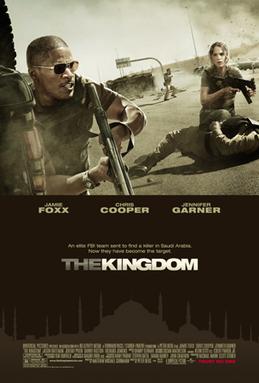
If I had to summarize Peter Berg's upcoming film The Kingdom in one sentence, it would be: "So good Jennifer Garner couldn't ruin it."

Before I dive into the meat of my review, here is a quick outline of the story. An attack similar to the 1996 Khobar Towers bombing and 2003 Riyadh compound bombing racks up huge death toll at a Western oil engineer enclave in Riyadh. Jamie Foxx plays the slick leader of an FBI terrorism task force that uses his bureaucratic wiles to get a himself and a small team (Jennifer Garner, Chris Cooper and Jason Bateman) into Saudi Arabia to investigate.

The political and bureaucratic resistance that Mr. Foxx's team encounters in Riyadh becomes an interesting microcosm of the difficulties in the U.S.-Saudi relationship. The Americans want to participate in the investigation and find the perpetrators. The Saudis keep Foxx's team at arm's length because they don't want to be seen by the Arab public as inviting Western paternalism.

In the end, Foxx makes a strong professional bond with a Saudi State Security colonel played by Paradise Now's Ashraf Barhoum that opens the right political doors for a energetic, joint Saudi-American investigation. The most gripping part of the film by far is a sequence where the U.S.-Saudi group battle to save a team member from a fate similar to Daniel Pearl.

While Foxx did a fairly good job, Barhoum's nuanced character really stands out in the film. In the same way that Foxx and Barhoum's relationship is a microcosm of the U.S.-Saudi relationship, Barhoum is microcosm of Saudi Arabia itself -- an earnestly pious nation that is being pulled apart by ineffectual leadership and an unyielding radical minority.

The best bit part goes to Jeremy Piven, who plays a stereotypically fast-talking, risk-averse deputy chief of mission for the U.S. embassy in Riyadh. Jennifer Garner even did a good job in her role as a quiet, conservatively-dressed forensic pathologist for the FBI. As my girlfriend said, Garner's performance was enhanced by the fact that she kept her enormous, uh, 'talent' underneath nondescript black T-shirts.

Altogether, The Kingdom is a great movie. Think of is as a far more subtle and less didactic version of Syriana. It is easily worth the price and hassle of seeing it on opening night (September 28th).

Oh and before you ask, the huge building used as the set for a Saudi palace is not actually a palace. It is the Emirates Palace hotel in Abu Dhabi.

Thursday, September 20, 2007

Vacation pictures!

I apologize for the lack of updates recently, but a whirlwind trip to San Diego and my transition to the State Department have been keeping my pretty busy. I should have everything straightened out soon.

I did upload some shots from my vacation though. I'm particularly proud of this picture of a tiny sand crab. Macro photography hasn't been easy for me.

I will also have a review for The Kingdom up soon (my girlfriend and I stumbled into a sneak preview last weekend somehow).

In the meantime, here is a music video for the Japanese metal band The Hizaki Grace Project. Hizaki is the blond chick in the red dress totalling shredding on lead guitar in their first hit, "Philosopher."

Hooray for chicks in metal bands.

Sunday, September 16, 2007

Back in town

I am back from the Outer Banks. It was a pretty good trip and I only had to work about 12 hours the entire week. I will be posting some pictures that I took using my new camera on my Flickr site today.

I returned to DC to discover that my interim clearance has finally come in at the State Department. I am supposed to start orientation on Monday, but I will be San Diego that day on Army business. So that's going to be a bit of a mess.

In the meantime, I point my readers to two things I stumbled across on vacation. First is this Get Your War On strip from late July:

Sure, sometimes Get Your War On is a little whinny, but sometimes it hits comic gold, such as the above strip. Second, here is a video of guys playing with their home made flamethrower and other such nonsense:

I will have pictures uploaded and movie reviews posted later today. I will do all of that when I get back from San Diego. Sorry about being such a tease.

Saturday, September 8, 2007

RE in NC

I've strayed from my native soil of Virginia for a beach vacation in North Carolina's Outer Banks. Unfortunately, tropical storm Gabrielle also decided to visit 'OBX' this week, so I don't know how much time I will be spending on the beach.

If the weather forecasters are correct, I may have plenty of time to update my blog from NC...

Thursday, September 6, 2007

They did it again

First of all, I can't believe I totally scooped the ExportLawBlog on this story. Clif Burns runs a tight ship over there, so I'm assuming this is the one and only time I will beat him to an export control story.

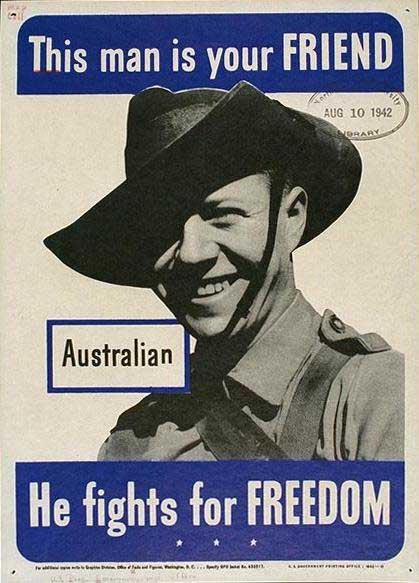
What is left for an administration that has secretly signed and negotiated a treaty with India that punches a huge hole in our nuclear export control regime and another that punches a hole in defense export procedures for Great Britain? Go for a hat trick by steathly negotiating and signing a similar arms trade treaty with Australia!

In a very low-profile meeting on September 5th, President Bush and long-serving Australian Prime Minister John Howard did just that. The State Department issued a fact sheet on the subject that is pretty light on the details, but I would bet that the Aussies are getting the same deal with gave the Brits a few months ago.

Both Bush and Howard mentioned the treaty at their 'joint press availability' that day. Howard's statement danced around the details and as usual, Bush's statement was so inarticulate that he didn't need to do the same.

Frankly, I am a little surprised by this latest defense trade treaty on two accounts. Some of the folks in the defense cooperation community of the Pentagon were at least aware of the British DTCT a few months before it was signed. The Australian treaty, on the other hand, came as a complete surprise.

Moreover, I am surprised that the Bush administration signed a second DTCT before securing the first one. They have no conception of how the Senate will react when the first DTCT comes up for Congressional review. It is also my understanding that the U.S.-UK implementing arrangements are still being hammered out between State, the Office of the Secretary of Defense and the British Ministry of Defence.

Bringing the Aussies to the table right now is probably going to spread our already over-tasked U.s. negotiators out even more -- and I would know, they are about 2 months behind on approving some agreements my office has negotiated.

I hear one OSD lawyer is so busy that he has to come in on Saturday and Sunday just to do his regular office work. If I was in his position, I would just walk away from that job. Life is way to short.

Monday, September 3, 2007

FCS Follies, Part 1

In a fit of boredom a few months ago, I wrote a briefing paper outlining what I saw as handful of critical issues related to network-centric warfare that need to reconciled before the Army starts fielding Future Combat Systems. I was planning to hold it until right before I left for the State Department, mostly to avoid becoming persona non grata at PM FCS.

One of my coworkers stumbled upon my two-pager back in May and unbeknownst to me, passed it up to the FCS folks with his name on it. After straightening out the plagiarism issue, FCS sent me a polite, but dismissive 'mind your own business' e-mail. Needless to say, I think I was taken off their Christmas card list.

During this whole affair, my boss was sent a copy of the paper and his reaction was much more positive. He suggested expanding the paper by including some solutions to these issues. I've decided to test each of these expanded ideas on my readers. Here is part 1:

"Lit up like Christmas Trees"

Soon after the summer 2006 skirmish between Israel and Hezbollah concluded, claims surfaced that Hezbollah managed to hack into the IDF's U.S.-made SINCGARS radios. It turned out that Hezbollah hadn't actually hacked the radios, but instead used a bank of modified radio scanners to track the electromagnetic emissions of IDF units.

This example points to a key vulnerability of the network-centric model, namely its vulnerability to electronic warfare support. In order to provide the kind of real-time data exchange and blue force tracking capabilities envisioned in FCS, the density of wireless communication will have to expand manifold.

Individual units and soldiers will not only be swapping a wider variety of tactical information, they will also be giving off a constant amount of positional data. They will be lit up like Christmas trees adorned in intense, but invisible lights. Each tank, truck and soldier will be a beacon of electromagnetic radiation that can be intercepted, triangulated and tracked.

Since it was playing defense on familiar territory, Hezbollah didn't need to crack the IDF's radios to carry out effective operations. They knew where their resources and units were located, so it was only a matter of triangulating IDF locations and feeding the information to nearby assets.

A future reduction in the cost and complexity of compact anti-radiation guidance packages for indirect-fire munitions would pose an even bigger threat to a network-centric force. If a simply seeker package just doubled the accuracy of the simple artillery rockets and mortars favored by insurgents, it could lead to serious casualties. Tactical network hubs will be easy targets at the very least.

There is no easy solution to this problem because it exploits the most indispensable part of network-centric warfare, the network itself. Lasers are the only wireless media that do not 'leak' a traceable amount of electromagnetic radiation, but it requires line of sight. DARPA has been contemplating a laser-based work-around for blue-force tracking called 'Dynamic Optical Tags' or DOTS for short.

In the DOTS system, each vehicle and soldier would be equipped with a tag that functions as a passive light modulator. When the tag's receiver is struck by an encoded laser signal, it modulates the beam to pack it with new information and reflects it back at the point of transmission. A powered version of this process could be used as a two-way interface between the tag and the light source.

This system would still be limited to line of sight and would have to mounted to an UAV (a blimp maybe?), but it would very difficult to intercept and track.

The problem with the phrase 'evil-doer'

I had conversation with a friend over lunch last week that got me thinking about how the word 'evil-doer,' specifically how use of the word has become more common in foreign policy discussions. This friend has been working for Program Executive Officer Soldier since he finished undergrad in 2005. He had limited exposure to politics or history as an accounting major, so he was picking my brain about the 'surge' and the War on Terror more broadly.

It is difficult to discuss U.S. foreign policy towards the Near East in the abstract, so before delving into my views, I asked him about how much he knew about the region. Not surprisingly, his response was 'very little,' so I refined my question to 'Do you know why a guy like OBL is a terrorist'? The response to that was 'He hates America and wants to take over the Near East. I don't know why he uses terrorism though. Evil is kind of hard to understand.'

At this point, I gave him a 20 minute primer on the origins of linkage between Islamic fundamentalism and grand terrorism -- starting from Sayyid Qutb's Milestones to today. He was particularly surprised to hear that even though Osama bin Laden and Saddam are not explicitly linked, al Qaeda's existence and mission are deeply intertwined with the 1991 Persian Gulf War and its aftermath.

[Explainer: Part of bin Laden's hatred towards the Saudi royal family comes from the fact that they chose American support over his offer to wage an Afghan-style guerrilla war in defense of Kuwait. Bin Laden's 1996 fatwah states that the presence of U.S. troops on Saudi soil as an affront to Islam. It also claims that the U.S. is culpable for the deaths of the millions of Iraqi children due to sanctions.]

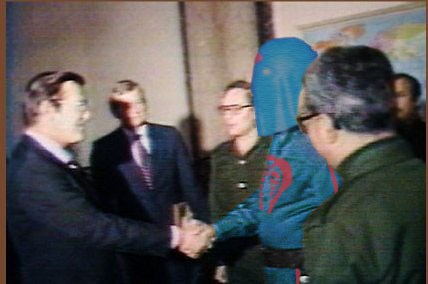
We need to move away from terms like 'evil-doer' because they allow people to paper over the murky elements of politics and war. We're not facing-off against an opaque, cartoonish foe, such as Cobra Commander or Skeletor. Bin Laden and his ilk more like Tony Soprano or even Tony Montana. They ruthlessly pursue a set of fairly clear objectives in a manner that is bounded by their own twisted sense of right and wrong.

After mentioning this conversation to another friend, she suggested that I photoshop Cobra Commander into the photo of Donald Rumsfeld and Saddam Hussein shaking hands in the 1980s.

Update: SG has just been brimming with great ideas. Here is a rough breakdown of what goes into G.I. Joe's definition of the "The Battle":